Welcome and thank you for joining me on this adventure. For the newbies, you can catch up on previous posts: first blog post, second blog post here, third blog post here, fourth blog post here, fifth post here, sixth post here, seventh post here, eighth post here, the ninth post here, tenth post here, eleventh post here, twelfth post here, thirteenth post, fourteenth post here, fifteenth post and sixteenth post here
This morning I got an automated email reminder from the NWO portal system that the deadline for my rebuttal is right around the corner on Monday 8th of June 2026, 11:00 hour CEST. It feels a bit like a ticking time bomb with each passing hour that I sit with the review comments. Honestly, the breadth and depth of the reviews feel overwhelming. It also feels stressful thinking through how to respond to the reviews within 1300 words. Yes, I know I have to be selective with what to focus on in the rebuttal. But knowing is one thing and being able to decide is another thing. I am ploughing through the drafting of the reviews but the other parts of my life also need time and attention. While I have paused certain elements of my everyday life, some elements like being a father can’t be paused – getting kids to school, picking them up, caring for them and just having some quality time together with them. It’s a muddling through process as I search for a balance across the various commitments of life while my mental space is fully consumed by the reviews and what to include in the rebuttal. Thankfully, some of my colleagues have been most helpful in thinking along with me in drafting suggestions as to how to approach the rebuttals. Other colleagues have also kindly shared their own rebuttals with me which helps to get a sense of best practices.
In my last blog post, I promised to share a bit of the reviewers with you. I don’t want to overwhelm you with all 9 pages of reviews so I’ve decided to share the section 3 of the assessment form with you. The reviewers in this section are asked to provide a summary of their reflections in terms of strength and weakness of the proposal.
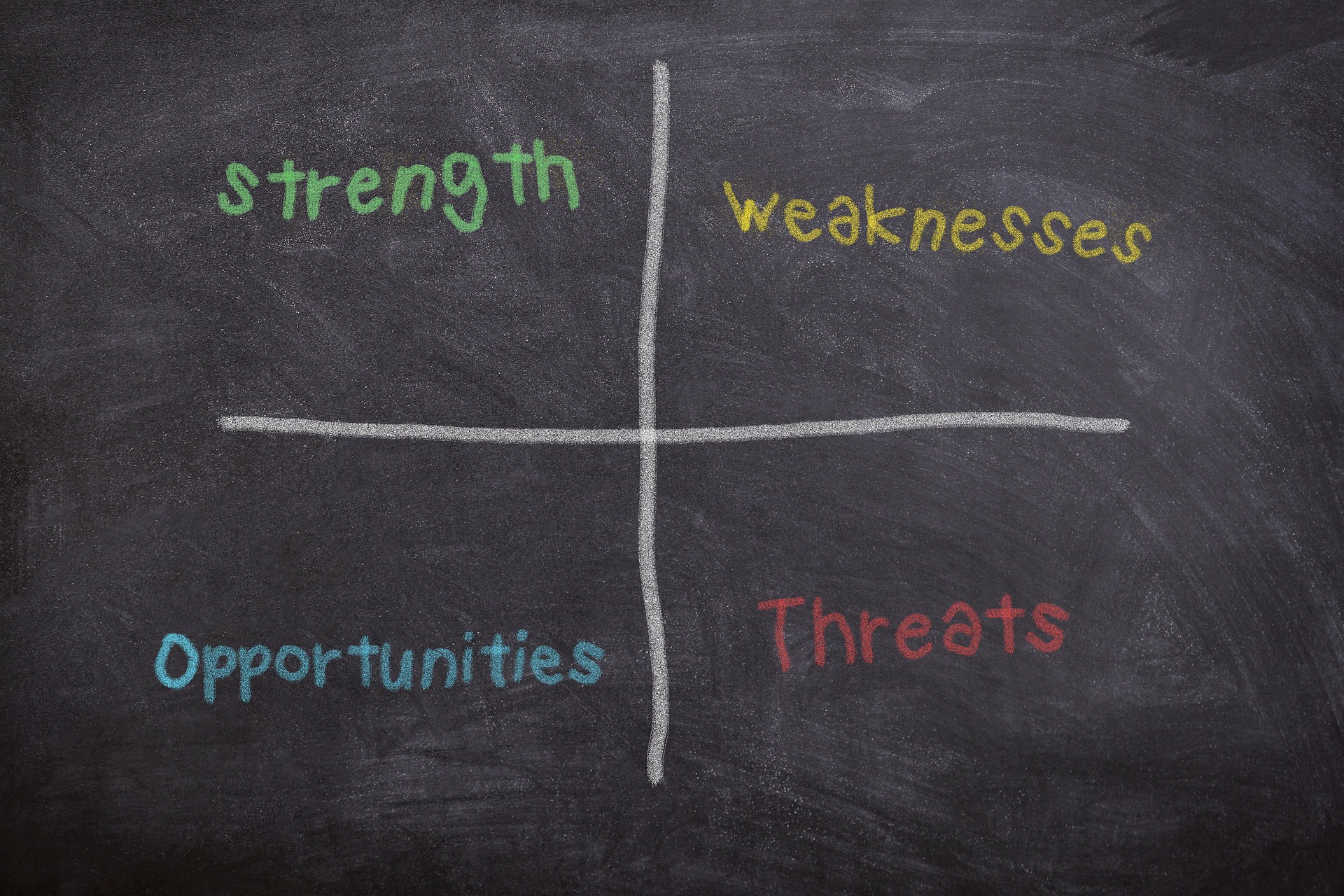
3 – Final assessment
Explanation
NWO kindly asks you to summarize the strong and weak points of the proposal as a whole. In answering the questions, please take into account the section about the proposed research (section 2a) and the section about the impact of the proposed research (section 2b).
Please formulate the strengths and weaknesses in such a way that they are comprehensible and substantiated for a broader scientific assessment committee that may be outside of your specific field of expertise.
3a
Please indicate point by point 5 strengths of the proposal and place them in order of importance, starting with the most important one. If relevant, please indicate which of the points are major and which of the points are minor.
comment referee 1
1. The proposal addresses highly relevant questions surrounding emotion, heritage, memory, and public engagement. These themes are increasingly important across heritage studies, tourism studies, and cultural geography. (Major)
2. The project attempts to bridge heritage studies, cultural geography, affect/emotion research, tourism, and public-facing engagement in ways that could generate meaningful interdisciplinary conversations. (Major)
3. The applicant has a strong track record of publication in journals such as Annals of Tourism Research and Journal of Heritage Tourism, which suggests the team is capable of carrying out a project of this scale. (Major)
4. The inclusion of outputs such as a documentary film, exhibitions, artistic components, conference panels, and a project website demonstrates an effort to reach audiences beyond academia. (Major)
5. If successful, the project could provide useful insights for museums and heritage sites interested in visitor engagement, interpretation, emotion, and difficult heritage practices. (Major)
comment referee 2
1. The proposal addresses a timely and important question with clear relevance across heritage studies, tourism studies, cultural geography, memory studies and related areas.
2. Its core conceptual move, the idea of “embodied moral emotions”, is original and potentially significant if developed with sufficient precision.
3. The mixed-methods design is ambitious and could be methodologically innovative for this field, especially in the way it combines site-based qualitative work with survey research and more advanced modelling.
4. The project aligns strongly with the applicant’s stated expertise while also representing a meaningful step beyond previous work.
5. The proposal has strong societal relevance and an imaginative impact strategy that is well matched to the topic.
comment referee 3
Theoretical innovation, development and contribution
Community outreach and societal impact
Comparative and international focus
Mixed methods approach to understanding
Heritage industry / professional practice implications for policy
3b
Please indicate point by point 5 weaknesses of the proposal and place them in order of importance, starting with the most important one. If relevant, please indicate which of the points are major and which of the points are minor.
comment referee 1
1. The literature review has significant gaps, especially regarding scholarship from cultural geography, affect/emotion studies, and critical heritage tourism. Important work on emotion, memory, race, plantation tourism, and difficult heritage is either missing or only minimally engaged. (Major)
2. Because much of the relevant literature is not fully addressed, it remains difficult to determine what specifically is theoretically or methodological new about the project and how it advances beyond existing work in the field. (Major)
3. The number and variety of proposed research sites, combined with long-term participant follow-up, make the project appear extremely ambitious. The proposal provides limited discussion of site access, institutional relationships, participant retention, or pilot testing. (Major)
4. While emotion is central to the proposal, it remains somewhat unclear how emotional responses will be meaningfully captured, assessed, and analyzed over time, or what is methodologically distinct about the proposed approach from other literature in the field. (Major)
5. The proposal repeatedly references justice/justice making but the concept remains abstract. Greater clarity regarding what justice means operationally within the project would strengthen both the theoretical framing and the societal impact discussion. (Minor)
comment referee 2
1. The project is over-ambitious relative to the available time, staffing and methodological burden. Its comparative breadth, data-collection demands and impact programme are unlikely to be equally strong in all parts of the project, and some loss of depth seems likely unless the design is prioritised more tightly.
2. Key aspects of implementation remain under-specified, especially around access, recruitment, survey adaptation across sites and likely attrition in follow-up data collection.
3. The theoretical framing still needs a stronger relational grounding. “Embodied moral emotions” is promising, but the proposal does not yet show clearly enough how emotions and moral orientations are co-produced within the encounter.
4. The quasi-experimental element should be framed more cautiously, since self-selection limits the strength of causal claims that can be made.
5. The societal impact strategy is compelling but too broad in its current form, and would benefit from clearer priorities, partner roles and safeguards.
comment referee 3
Visibility of key stakeholder groups in current narrative
Preciseness of focus for individual roles within team
Specification of some dissemination activities
Degree of engagement of stakeholders in “tapestry artwork” could be strengthened
Now I need to get back to drafting and finetuning my rebuttal. Let me know if you have any inspired ideas for me to include in my rebuttal.
The adventure continues…see you for another instalment of the #NWOVididiaries blog post.


Pingback: “I came, but can I see?” XVII: Interview scheduled for September 4!(#NWOVidi2025diaries) | Emmanuel Akwasi Adu-Ampong
Pingback: “I came, but can I see?” XVIII: To kill a mocking interview (#NWOVidi2025diaries) | Emmanuel Akwasi Adu-Ampong
Pingback: “I came, but can I see?” XIX: Interview done…time to wait(#NWOVidi2025diaries) | Emmanuel Akwasi Adu-Ampong
Pingback: “I came, but can I see?” XX: Denied! Rejected! No grant awarded(#NWOVidi2025diaries) | Emmanuel Akwasi Adu-Ampong