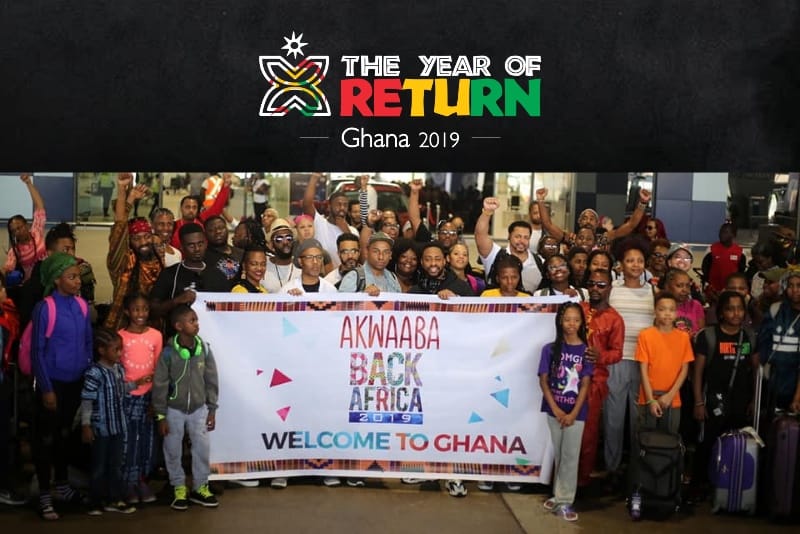
It took a while to cook this to the right taste but it is well done now….we are delighted to invite you to savour and enjoy this freshly baked off the hot press research article that has been published in the Tourism Geographies journal. This article forms part of the outputs from my ongoing NWO funded Veni project titled: The Embodied Absence of the Past: Slavery, Heritage and Tourism in the Ghana-Suriname-Netherlands Triangle .This paper is co-authored with the wonderful Alana Dillette who is an Associate Professor in the L. Robert Payne School of Hospitality and Tourism Management at San Diego State University in the USA. I got to learn a lot from her expertise in the area of African Diaspora Tourism, Black Travel Movement, Race & Inequity etc, as well as her own embodied lived experience traveling to Ghana. It was such great fun working on this project together across Pacific and Central European Time zones.
In this paper, we try to separate some of the ingredients that together made The Year of Return Ghana 2019 (#YOR2019) such an impressive phenomenon for all sort of reasons. We sought to explore which amount of commodification (commercialisation) was needed to commemorate the past of slavery heritage. How was the resulting commodification-commemoration meal served to African diaspora who travel to Ghana during the #YOR2019? Among other things, we found: an increase in the number of events and festivals that have emerged in relation to slavery and colonial heriage; a reframing of Ghana’s destination image towards the African diaspora. The #YOR2019 served as a pivote to move beyond a focus on slavery heritage to a destination image that emphasises the natural tourism attractions and importantly business travel to explore investment opportunities. A key insight we established was that the increase in events and festivals (commodification) in slavery heritage tourism does not inherently destroy cultural meanings found in traditional roots tourism of the African diaspora. Instead, these new events and festivals provide new commemorative meanings for a new generation of Black travellers searching for more than just their roots.
The article is Open Access so freely available for download and can be accessed here: https://www.tandfonline.com/doi/pdf/10.1080/14616688.2023.2275731
Commemoration and commodification: slavery heritage, Black travel and the# YearofReturn2019 in Ghana
Abstract
In marking 400 years since the first enslaved africans arrived to Jamestown, United states in 1619, the Ghana government through the Ghana tourism authority initiated the Year of Return 2019 (#YOR2019). the goal was to unite africans in the diaspora with those on the continent, especially in Ghana, through a year-long calendar of commercial and commemorative slavery heritage tourism activities ranging from visits to slavery sites, healing ceremonies, theatre and musical performances, festivals, investment forums and relocation conferences. When a destination tourism product is rooted in a less-than-desirable past, how is ‘balance’ achieved between commercialization and commemoration? in exploring this conceptual question, we developed a methodological innovation utilizing the social media platform twitter for data collection. Using a social media crawler coded in Python programming language, we scrapped tweets from the accounts of the Ghana tourism authority prior, during, and after the YOR2019 based on hashtag searches. after data cleaning, 1010 tweets were inductively analysed using NViVO qualitative data analysis software. the findings revealed three emergent themes along a commodification-commemoration continuum: (1) the eventification and festivalisation of slavery heritage tourism, (2) celebrity co-production of YOR2019 experiences through social media and (3) pivoting from a predominantly slavery heritage destination to a destination that focuses on other touristic and business travel. Ultimately, YOR2019 marked a significant push by Ghana to move into a ‘Beyond the Return’ phase that pivots away from slavery heritage towards a more well-rounded tourism product for roots, leisure, and business travellers. The research established that commodification in slavery heritage tourism does not inherently destroy cultural meanings but provide new commemorative meanings for a new generation of Black travellers searching for more than just their roots.
Adu-Ampong, E. A., & Dillette, A. (2023). Commemoration and commodification: slavery heritage, Black travel and the# YearofReturn2019 in Ghana. Tourism Geographies, 1-20.
 Emmanuel Akwasi Adu-Ampong
Pingback: Live and On Air: a podcast discussion on the #Yearof Return2019 paper | Emmanuel Akwasi Adu-Ampong