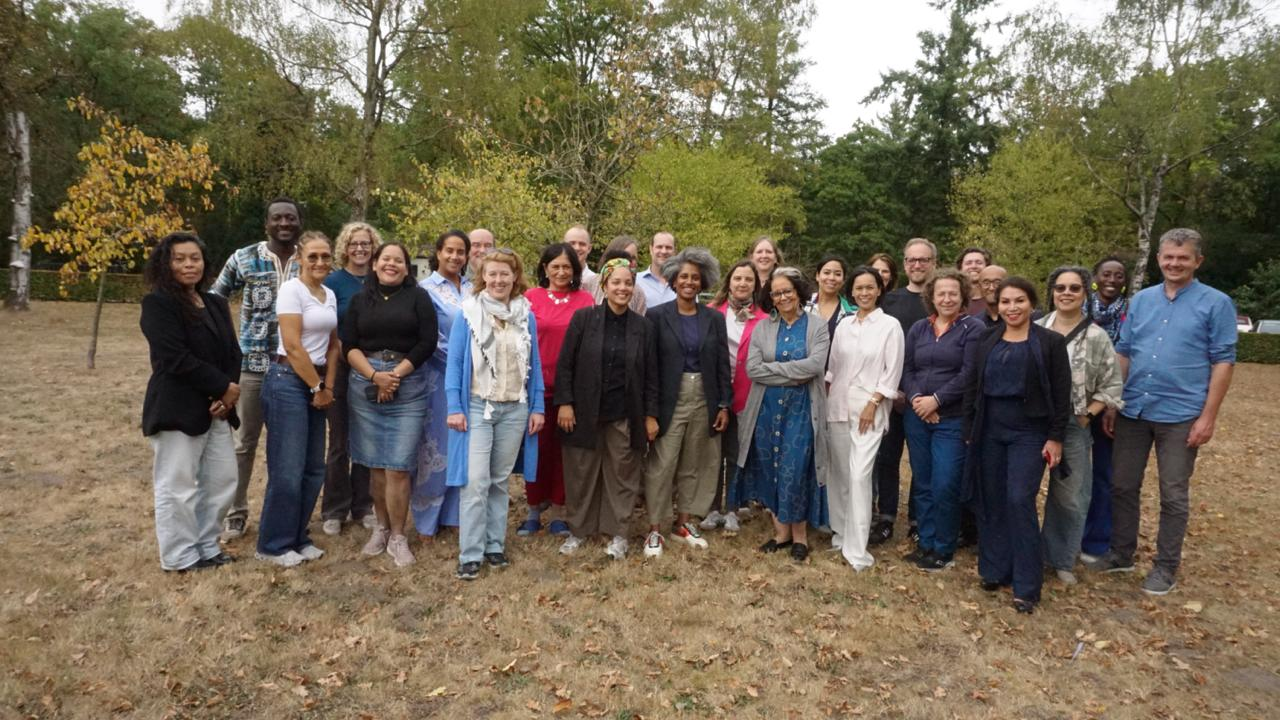
In the last week of August 2025, I spent one intense week with a group of wonderful colleagues in a research sandpit event organised by the Dutch Research Council (NWO) in Westelbeers. We worked together in developing a research proposal under the the Dutch Research Agenda (NWA) Call ‘Slavery pasts: (understudied forms of) impacts and perspectives’. After the sandpit event, we continued developing the proposal for over five months before the final submission, review and interview stages in the early spring of 2026.
Delightfully, our proposal have been awarded the grant with a press announcement on 29 April – when I was on holidays with my kids. It’s great to have the opportunity to work together with such a wonderful group of committed researchers. I am looking forward to the next 5 years of research on this topic and the many uncharted paths we will be taking.
Below is the press release from the NWO:
One project receives funding for research into the understudied impacts of the Dutch slavery past
- 29 April 2026
One project has been awarded funding under the NWA Call ‘Slavery pasts: (understudied forms of) impacts and perspectives’. Colonial slavery has left a deep mark on world history. To this day, this past continues to have consequences in contemporary societies. The funded project aims to stimulate academic and applied research into the under-researched legacies of the Dutch colonial history of slavery.
The traces of the Dutch history of slavery and colonial past are still present in our contemporary society. Developing knowledge about the role and influence of the Dutch colonial history of slavery in our current society is a necessary prerequisite for gaining a better understanding of its long-lasting and often far-reaching effects.
This research programme aims to stimulate research into the often lesser-known consequences of the Dutch history of slavery. The programme aims to contribute to the debate on how societies deal with past injustices and work towards a just future. It also aims to strengthen the development, sharing and preservation of knowledge on this subject within the Kingdom of the Netherlands.
The project:
Slavery past present: Dutch slavery and colonialism and their present-day impact
Main-applicant: Dr. A.E.G. (Alana) Helberg-Proctor (University of Amsterdam)
Consortium
Dr. Emmanuel Akwasi Adu-Ampong (Wageningen University), Dr. Markus Balkenhol (Meertens Institute), Dr. Sadiah Boonstra (Universitas Gadjah Mada, Indonesia), Prof. Dr. Ben Crum (Vrije Universiteit Amsterdam), Dr. Benedicta Deogratias (University of Aruba), Ida Does (Ida Does Productions), Prof. Dr. Serena Does (Verwey Jonker Institute), Dr. Renzo Duin (International Center for Amazonian Indigenous Knowledge AMIK), Dr. Coen van Galen (Radboud University), Dr. Rachel Gillett (Utrecht University), Dr. Margo Groenewoud, Dr. Deniz Ikiz (Technische Universiteit Eindhoven), Nancy Jouwe, Claudia Kraan, Dr. Harro Maat (Wageningen University), Wim Manuhutu (Vrije Universiteit Amsterdam), Dr. Linda Mann (AARN, Columbia University, USA), Dr. Erica Meijers (Protestant Theological University), Prof. Dr. Siona O’Connell (University of Pretoria, South Africa), Dr. Matthias Rosenbaum-Feldbrügge (Radboud University), Dr. Carolina Sanchez-Jaegher, Uriël Sabajo (Diaspora Instituut Nederland DIN), Melissa Stamper, Afiah Vijlbrief-Angela (University of Amsterdam), Diana Vlet (Stichting Herdenking Slavernijverleden SHS), Dr. Sanne Weber (Radboud University), Dr. Patricia Wijntuin (Utrecht University), Dr. Paul Wolff Mitchell.
The legacies of Dutch slavery and colonialism continue to affect people and communities today. Despite formal apologies by the Dutch government, ongoing injustices persist and have been largely excluded from academic research and public discourse—a form of epistemic injustice. The NWA project Slavery past present: Dutch slavery and colonialism and their present-day impact investigates how Dutch slavery and colonialism’s legacies continue to impact lives today and explores possibilities for redress from the perspectives of descendant and Indigenous communities in and from Suriname, the Dutch Caribbean, South Africa, Indonesia and the Netherlands.

