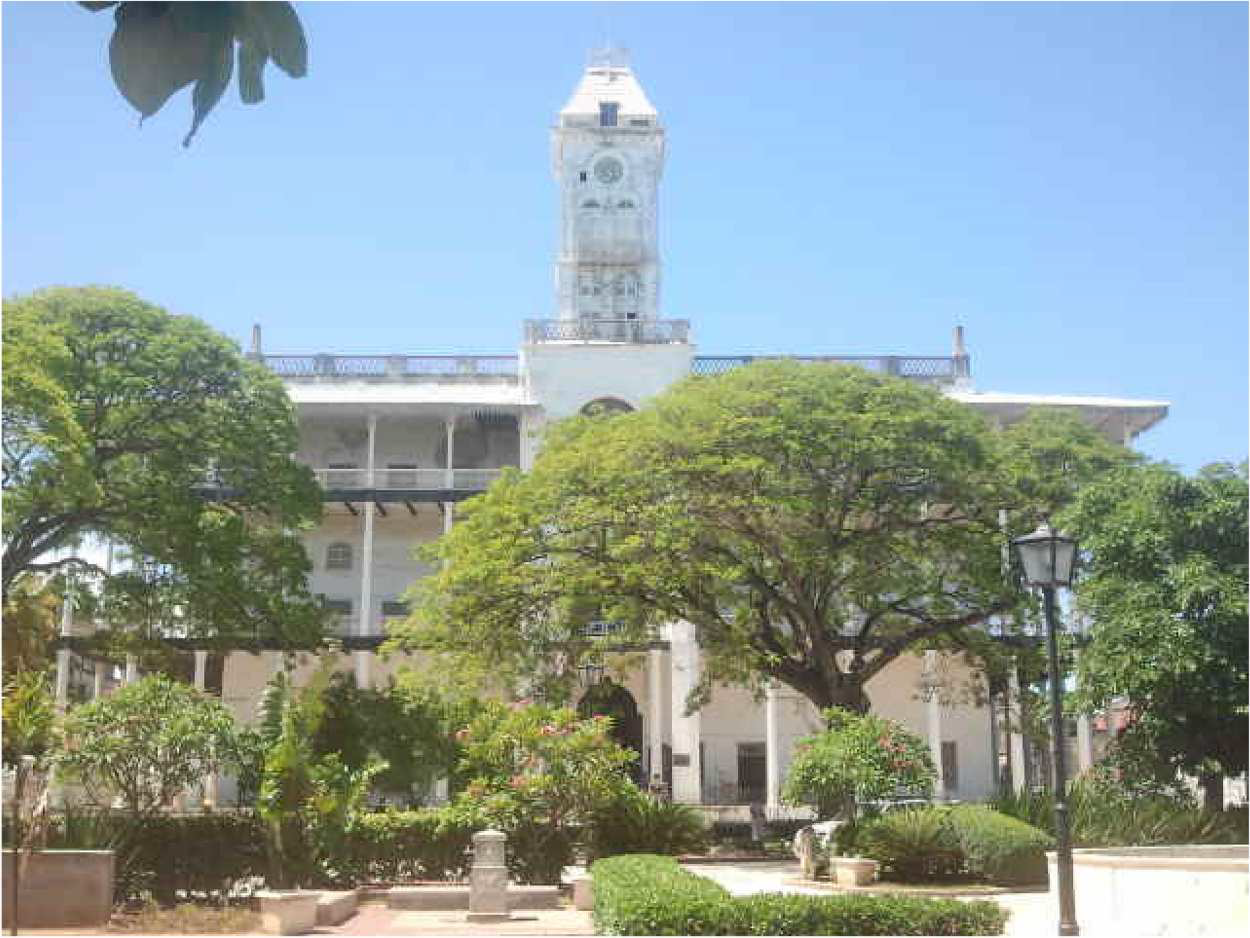
This took a while but I guess all is well that ends well. We submitted the first version of the manuscript in September 2022 and over the next three years we went through the ringer of revise and resubmit. At some point I did want to give up on the manuscript and put it on the pile of ‘coulda-woulda-shoulda’. But my co-authors’s persistence won me over and we stayed the course until the manuscript got accepted in October 2025. Thanks to my co-authors: Khamis Sheha Haji of the Department of Museums and Antiquities in Zanzibar and Noel Biseko Lwoga who is the CEO and Director General of the National Museum of Tanzania and parttime lecturer at the Department of Archaeology and Heritage Studies, University of Dar es Salaam. Noel and myself are both affiliated with the School of Tourism and Hospitality Management of the University of Johannesburg, South Africa. We’ve collaborated in the past on a chapter in the Routledge Handbook of Tourism in Africa that I co-edited.
I would like to thank Débora Póvoa for the excellent professional proofreading and copyediting of the final manuscript. Débora is working as a Postdoc with me at the Cultural Geography Chair group of Wageningen University & Research.
Here is a link to freely download the article. There are 50 free eprints available through this link article
https://www.tandfonline.com/eprint/ZIUSNK63ZZE2SNDNRFKT/full?target=10.1080/2159032X.2025.2582895
Heritage Conservation Management and Inter-Institutional Relations at the UNESCO World Heritage Site of Zanzibar Stone Town, Tanzania
ABSTRACT
There is an increasing agreement between academic researchers and heritage practitioners in the field about the need for stakeholders to have much greater involvement in the management of cultural heritage. The concept of inter-institutional relations is important for gaining a full understanding of the changing relationships of stakeholders collaborating in cultural heritage management, in which conflict is thought to be the norm. This study seeks to challenge this notion of conflictual relationships as the norm in heritage conservation management, using Zanzibar Stone Town, a World Heritage Site, as a case study, by exploring the range of inter-institutional relationships involved in managing cultural heritage. Using documentary analysis and semi-structured interviews with key informants, our research shows a diverse range of inter-institutional relationships beyond conflict. Good relationships are seen in collaboration and exchange of expertise, information, and funds that enhance the conservation of heritage, while poor relationships get exemplified through negligence, arguments, and nascent conflict that impede conservation objectives. The study broadens our understanding of the nature of inter-institutional relationships in managing heritage conservation in historic towns with World Heritage status while highlighting research and policy implications.
 Emmanuel Akwasi Adu-Ampong