What does it take to translate academic research into valuable resources and elements for societal engagement (and hopefully some societal impact)? In the past couple of months – actually since December 2024 up to now – I have been doing a sort of autoethnography in search of answers to this question. During this time, I took an informal sort of ‘sabbatical’ away from churning writing out more formal academic outputs in the form of journal articles, research notes, viewpoints and book chapters. So did I find an answer to this issue of translating academic research into societal engagement and uptake? The short answer, in true academic fashion, is – “Yes, no and, it’s complicated”.
What I can say with great certainty is that translating research into societal engagement takes time, a lot of patient, slow and unhurried time. This is because the research-to-societal-impact value chain involves a lot of hard work – of establishing connections, building and nurturing relations and often just sitting still to listen. Thus, it takes the slow hard work of patient engagement and collaboration between the researcher and key stakeholders in order to translate ‘excellent’ research into formats feasible for societal uptake. But this need to start much earlier in the whole research process when thinking of the research topic, research design and research questions. In my experience, I have found that a truly use-inspired and community-embedded research project offers the most optimal starting point that ensures that research outcomes are of use to the community and can quickly be taken up in societal engagement. I have also come to learn that sometimes serendipity strike in ways that exponentially increase the societal impact of research.
I want to reflect briefly on my research-to-societal-engagement experience in the past couple of months – first on the tapestry project and then (hopefully) in a later post on the mini-calabash of documentary screenings:
On needles and threads: From the last week of May until the middle of July, I was heavily involved in the ‘Threads of our Dutch Slavery Past’ embroidery tapestry project as a project coordinator for Wageningen where we were to make pieces of embroidery work. I signed up to this project because it represented a key essence of my past and ongoing research and offered a way for me to bring my research to a wider societal audience. Initially, I thought I could just bring the embroidery matters to the various locations and then leave but it quickly became clear that I had to be there from start to finish of each planned session. This was a lot more time commitment that I had initial figured but as we say in Ghana, “once you put your hands in an elder woman’s food, you have to keep eating until the meal is finished”. It was a slow, patient kind of time investment through which I got to explain the project to people passing by our work sessions on the university campus and in the city centre of Wageningen.
The inevitable question that was repeated by almost all the people who came by to hear more about the project was on how this project related to Wageningen University and the research we do. This was the opportunity that I foresaw in the initial idea of getting the university and city involved in this project. I took the opportunity of the question to engage people about my NWO Veni research work on slavery and colonial heritage tourism in the Ghana-Suriname-Netherlands triangle and my ERC Starting Grant project with new cases to be explored. I came to enjoy the exchanges about my research and the insightful questions that people asked of me. It was slow work and time consuming but this sort of in-person engagement was much more than I ever might get with any of my published research – dare I say that the in-person engagement felt more meaningful that what any citations could offer as far as societal engagement and public outreach is concerned.
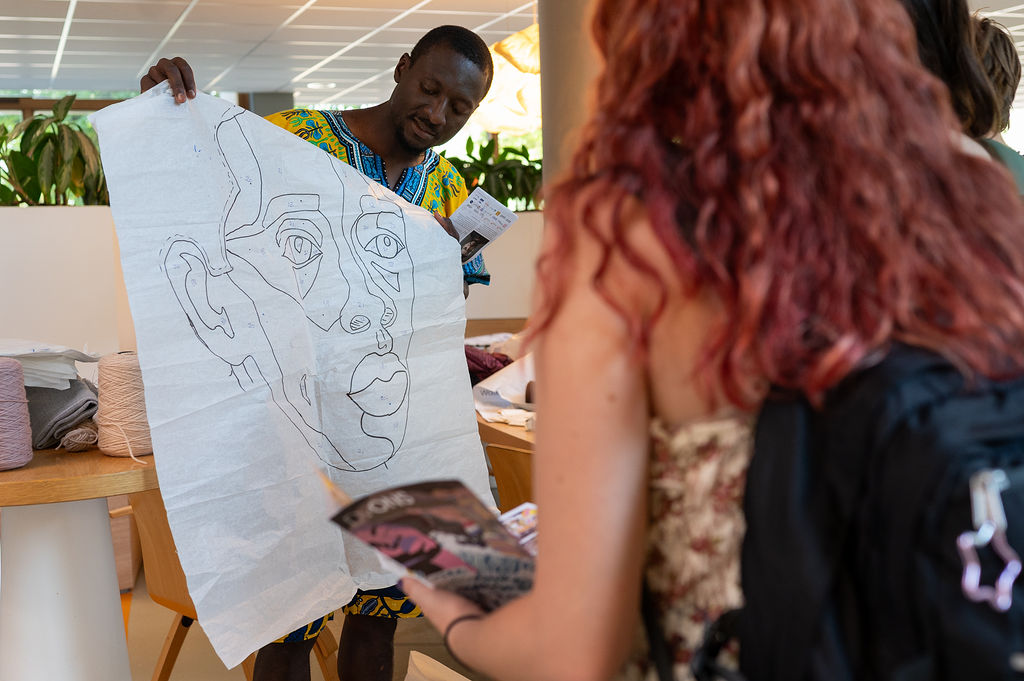

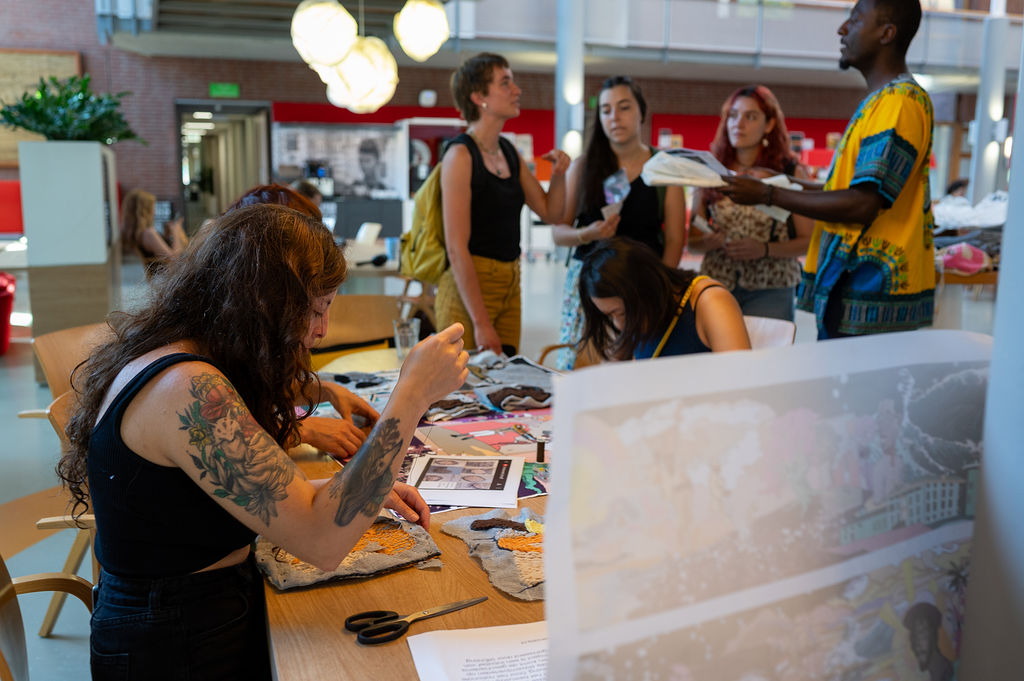

This process of direct public outreach and societal engagement came with its own difficulties. For instance, in the initial phases of heavy marketing of the embroidery project across the university intranet pages, I got a comment insinuating that I was pushing “a political and activist agendas” with the post about “our Dutch slavery past”. I gently explained that this was no propaganda work but a project directly linked to my funded “scientific” research. Furthermore, Wageningen University itself recognises the importance of the topic and have commissioned research into its own colonial entanglements in Suriname and Indonesia. Another form of challenge was those times when I will show up to a work session with all my embroidery materials and accoutrement and get no engagement. During those rare moments, I did wonder if it wouldn’t have been better to have used those hours making a headstart on another research article. But such wonderings were quickly out of the window when I get to speak with a single person interested to learn more about the project and my research work. There is a certain thrill in explaining your research to someone and helping them see connections where they may not have thought of before. I got to practice my Dutch langugage skills especially for the work session in the city centre where I explained the project and my research in Dutch to the many wonderful ladies and elderly women who joined the regular Knitting Cafe.


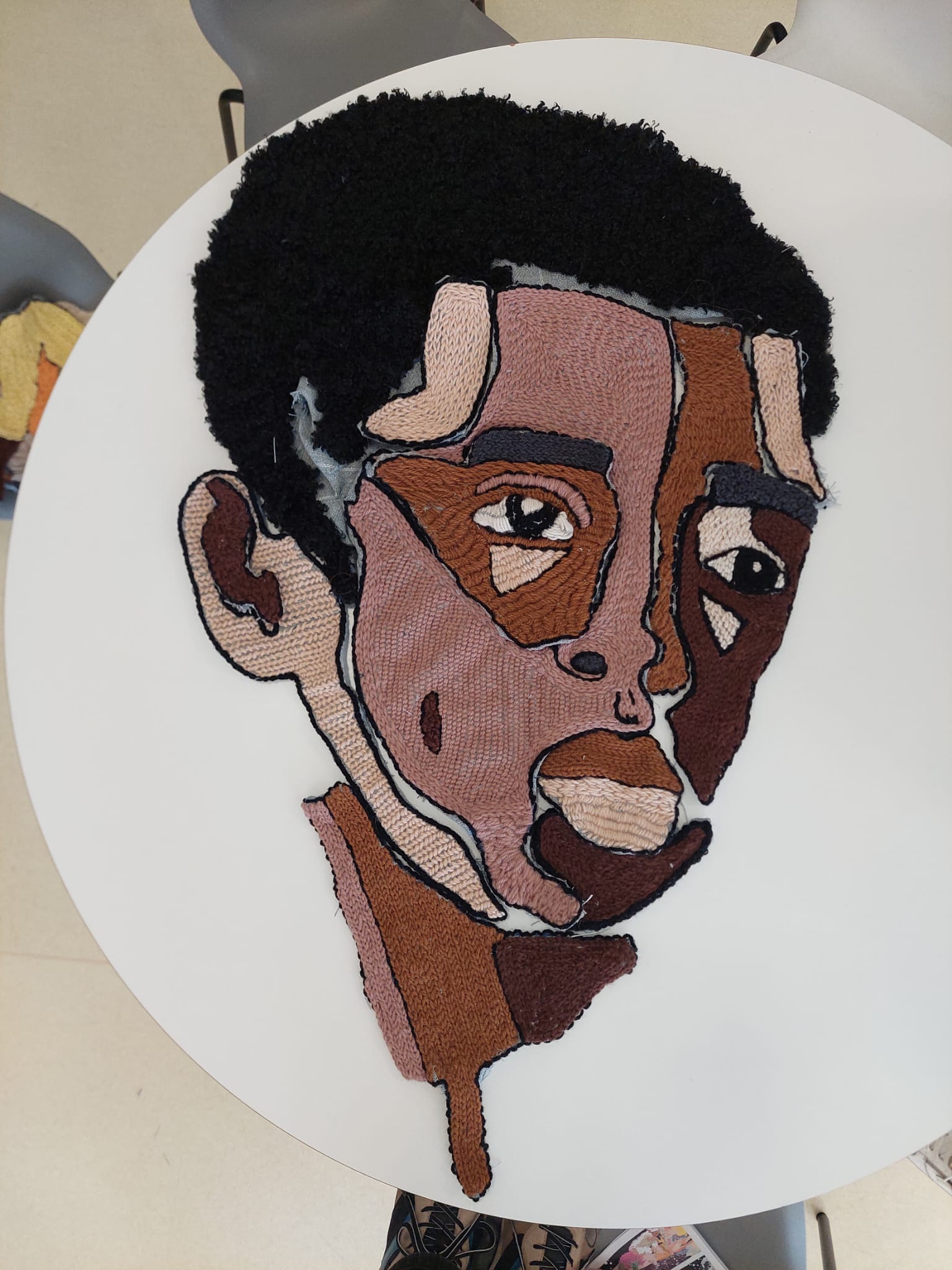

I am glad and yet also sad that the embroidery project has ended but I hope we are able to do this again in some form in the future. To think of the many hands that have contributed to this tapestry in diverse ways makes this a truly joined up shared community/societal project.
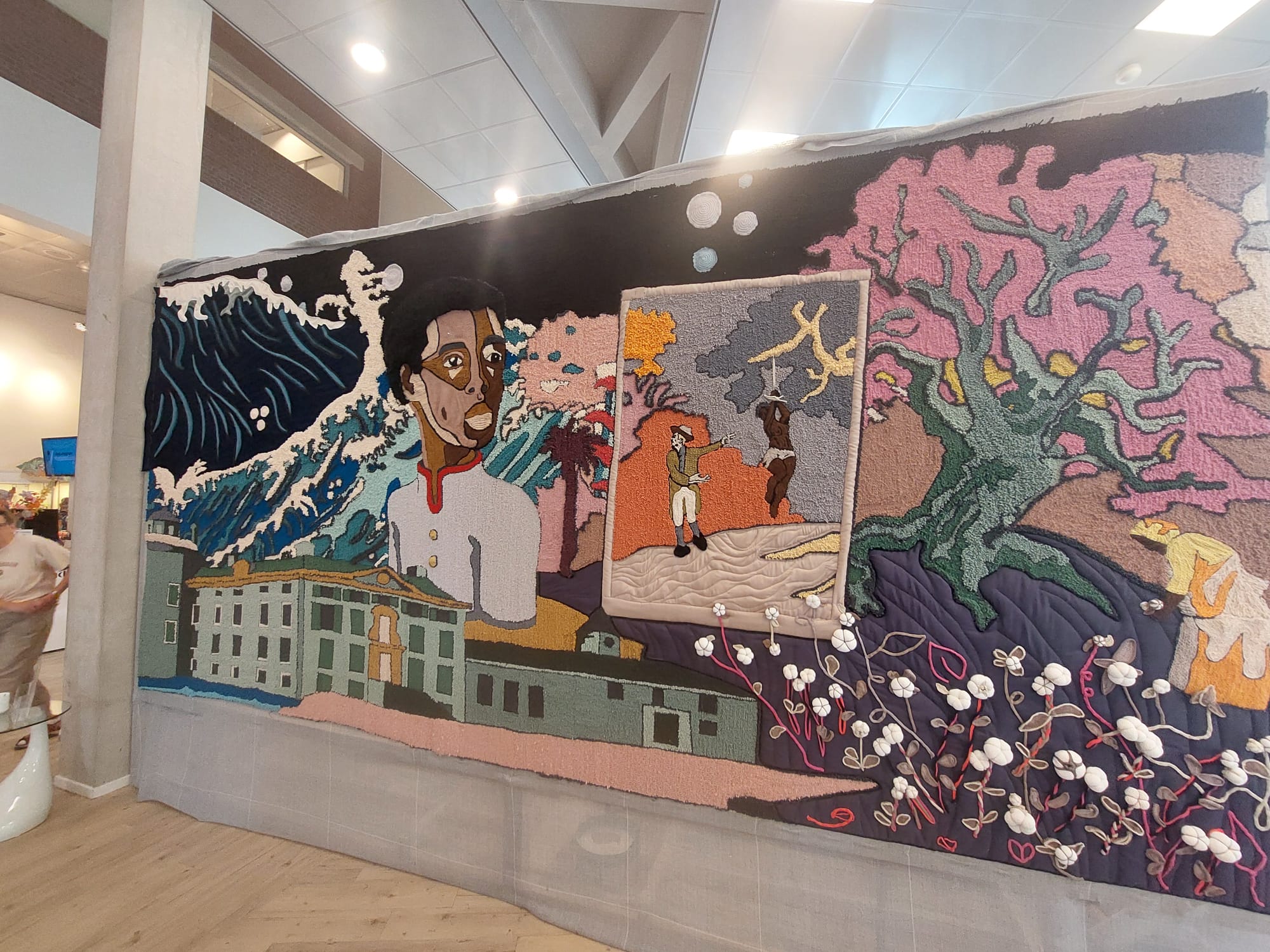
Hopefully the time investment and reach of this form of slow hard work of societal impact wibl be rated much highly in my next promotion interview to compensate for the relatively limited number of journal publications. I would want to do this form of project again and I’m currently in talks about making Wageningen University a location for an additional piece of the tapestry that needs doing. Fingers crossed that we get permission for a fixed location on campus. I’ll keep you posted.
 Emmanuel Akwasi Adu-Ampong
Pingback: The slow hard work of societal impact II: on screens and screenings | Emmanuel Akwasi Adu-Ampong
The tapetry prjoect you are doing and all related cultural heritage actvities are the best way to engage with communities – they learn through doing (hands-on), exchange skills and knowledge. They get to know what happens or happened in African an dother parts of teh world. Soldier on!!!
LikeLike