How do recruitment managers do this? How do they sort through CVs upon CVs of highly qualified candidates in order to shortlist the few that might proceed into the interview stage? How do they make the final decision after witnessing the brilliance of all the shortlisted candidates during the interviews? Flip a coin and hope for the best? Perhaps there is a specific personality trait for recruitment managers that I don’t possess. Now come to think of it, back in the early 2000s while I was studying for my BA Sociology & Social Work degree I thought I wanted to be HR manager :). I choose my specialisation courses in this direction: Organisational Behaviour, Industrial Sociology, Human Resource Management, Social Psychology. Well, I’m glad that the dream of becoming an HR manager fizzled out. Maybe I would have learned on the job how to hire and fire? A counter factual to ponder over on another day.
In November 2024 we published the vacancy advert for 3 PhD candidates on my ERC project . I felt a mix of excitement and dread once the advert went live. From that moment until the deadline of 23 December 2024, my email inbox was as busy as Kejetia Market in Ghana. Oh, how I tried to stay on top of my inbox by quickly responding to enquiries about the positions advertised. Yet there were times that the emails overwhelmed me. This was partly my own doing as I specifically asked interested applicants to message me for a copy of the project description upon which they were to then write a 2-page research idea. But asking prospective applicants to email first was also a screening process I figured will help to reduce the number of formal applications. Due to the disciplinary and language requirement associated with each of the three sub-projects, I wanted to make sure that people do not commit time and effort into a process they stood little chance of being considered. In this sense one might have a fitting disciplinary background but if you don’t meet the language requirement of Dutch, Portuguese and German, then there was no point in applying. Thus over email, I was able to gently let down some 50 or so people whom I strongly encouraged not to apply as it will not be an effective use of their time and efforts. Most took this initial response graciously as it saved them from a vain hope. Some did wonder if they couldn’t quickly learn the language once they got started with the PhD – but the answer was a no.
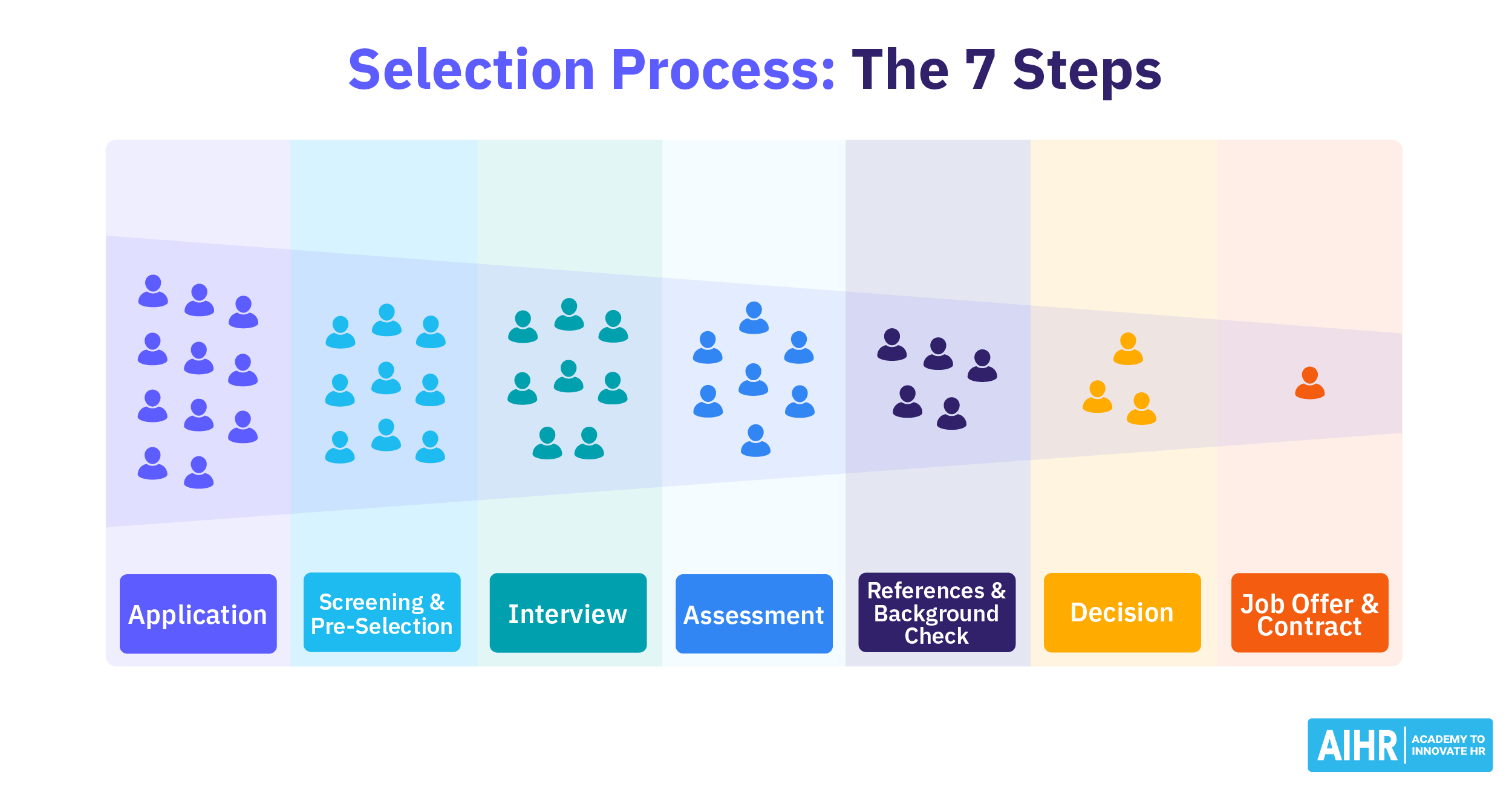
In the end we received some 110 formal applications through the university system. This was notwithstanding my first screening process over email that gently said no to some 50 people. Imagine this: 160 prospective candidates for 3 available PhD positions. How do you juggle and puzzle this many highly qualified people and arrive at a longlist, then a shortlist and then an interview list, and then select only 3? Well, I did read through every submitted application packet – cover/motivational letter, CV, 2-page research idea and a sample academic writing piece. Let’s just say that I could quickly discount about half of the application for reasons ranging from lack of disciplinary fit of what we were looking for. This leaves us with 80 strong applications to brood over. Each applicant had something exciting to offer which meant I went from “oh this candidate has a strong profile and writes well’ to “oh wow, this other candidate has such an exciting way of writing” and then to “oh wow, wait a minute, this candidate offers an incredible idea for approaching the topic”. I found myself surrounded by brilliance. It hurts to have had to make a selection. I wished I had enough research grant money to offer a PhD position to more applicants.
It felt unfair to turn down so many well qualified and suitably motivated candidates who wanted to contribute to such an important research topic. Finally, we shortlisted several candidates and interviewed fewer still. For many of the applicants, there was nothing amiss in their application. It was simply because of limited resources to hire more than 3 candidates and also the peculiar issue of us fitting together different disciplinary backgrounds against language requirements. For instance we had very strong candidates with a history background across the 3 cases but we couldn’t possibly fill up the team with only historians. Neither could we fill up the team with only those with a Cultural Anthropology background, nor only those with a Tourism Studies background, nor only those with a Heritage/Memory Studies background, and not to talk of those with a Cultural Geography background. For instance, puzzling a Tourism Studies person for the Ghana-Suriname-Netherlands case study meant you couldn’t puzzle someone with the same disciplinary background in the Angola-Brazil-Portugal case study nor in the Namibia-Brazil-German case study. This also accounts for other disciplinary background and skill sets that had to be spread across the team in complementary ways. Thus it was such a process of constant permutations and combinations. The process brought back memories of my Senior Secondary School days when I struggled in my Elective (Pure) Mathematics class when we had to work through the calculation formulae for Permutations and Combinations. I did however always loved the sound of the topic and how it rolls off my tongue – Permutations (pɝmjuˈteɪʃənz) and Combinations (kɑmbəˈneɪʃənz). But I digress…..
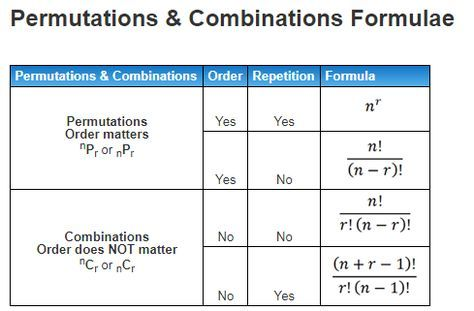
After much agonising we worked out the Permutations and Combinations formulae and settled the puzzle. I am delighted to say that we have managed to piece together a team of 3 PhD candidates. It was a rather difficult process for myself and my colleagues on the panel to piece together the jigsaw puzzle of a team of 3 candidates with complementary profiles, complementary disciplinary background and skill sets, out of the many excellent candidates. In the end we settled on a particular combination of candidates that we felt might work best and help to achieve the project ambitions. It’s pretty exciting to imagine how the team gels together and to anticipate what amazing work we can do together. At the moment, it’s all theoretical in terms of how the 3 candidates might work together. Thankfully we don’t need any mathematical formulae for this. We can wait to see how this process of team formation plays out empirically. The 3 selected PhD candidates will officially begin their journey with us at Wageningen University & Research from September 2025.
I’m glad that we could sign them up now so that we have time to sort out admin, visas, housing and the whole onboarding process. The candidates then also have time to wrap up their current commitments and begin to look forward with great anticipation to the project start. For now we keep the candidates identities under wraps and in due time they will be introduced here. We remain very grateful to all the applicants for their time, availability and contribution of their ideas and thoughts to the project through their applications.
 Emmanuel Akwasi Adu-Ampong
Pingback: FRICTIONS starts today!: lift-off time for my ERC Starting Grant project (Frictions of space: the generative tensions of slavery and colonial heritage tourism) | Emmanuel Akwasi Adu-Ampong
Pingback: Namib Notes IV: When the field becomes personal and the personal becomes the field | Emmanuel Akwasi Adu-Ampong