It is one thing to dream about it, one thing to get funding to research about it, one thing to teach about it and surely one thing to actually be the one to do it. This was a fully embodied experience for me. How could I have seen it when I first set out my dream research programme on the geographies of slavery and colonial heritage tourism back in 2020? In that dreaming, I noted that,
I am excited about what lies up ahead notwithstanding the known knowns and the many known unknowns in terms of research funding, collaborations, PhD recruitment and getting this research programme up and running. The plan is to gradually expand and scale up the research programme to the study of the practices and performances of/in slavery heritage tourism spaces through a comparative study of selected Africa, American/Caribbean and European countries (France, Spain, Portugal and UK) with a shared history and heritage of slavery. Ultimately, by exploring the issue of slavery heritage tourism my aim is to show how such practices and performances can be essential for promoting increased cultural understanding and harmonious social living in the increasingly multicultural societies at risk of polarisation – see recent events on #blacklivesmatter #blm.
There is an urgent need to address rising racism, discrimination and intolerance and I want my research to be able to provide insights about sensitive places of remembrance, and the cultural value of (slavery) heritage in stimulating public engagement and in understanding and coming to terms with the past. I will highlight the lived experiences of visitors to slavery-heritage tourism sites, the tensions in these places and the transformative potential of such touristic visitations. I believe the more we tell the stories of the past, the more awareness we generate, the more united we become and the better we can tackle present challenges such as polarisation, racism and discrimination.
I did dream of using my research to tell stories of the past in ways to increases awareness of the shared past and contribute to cross-cultural understanding. However, I didn’t see myself becoming a tour guide in my own adopted city of Wageningen. But here we are four years later and I found myself having to put my body where my research lies. A truly embodied experience of directly translating my research for societal benefit.
As part of the programme for Keti Koti 2024 in Wageningen, I suggested to have a guided tour of Wageningen’s slavery and colonial heritage traces in the cityscape. It was dubbed as an interactive walking tour of Wageningen and that is what it was. Thus I had my first ever experience of being a tour guide for a group of 17 enthusiastic participants.
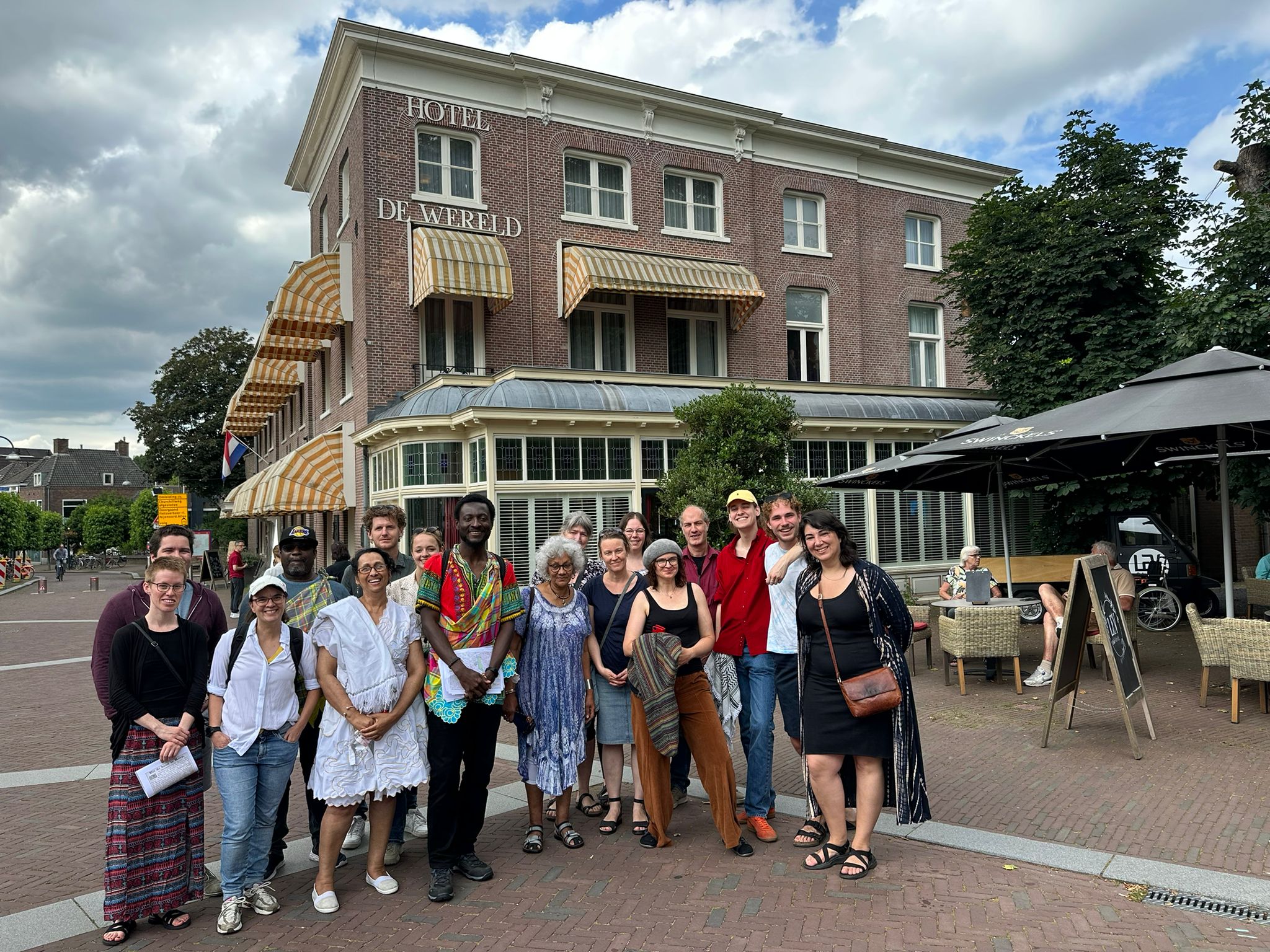
We started the tour from the biggest Magnolia Tree in the Netherlands which is found in the Torchpark of Wageningen. Here, I told the stories of Wageningen’s connection to the town of Wageningen in Suriname.
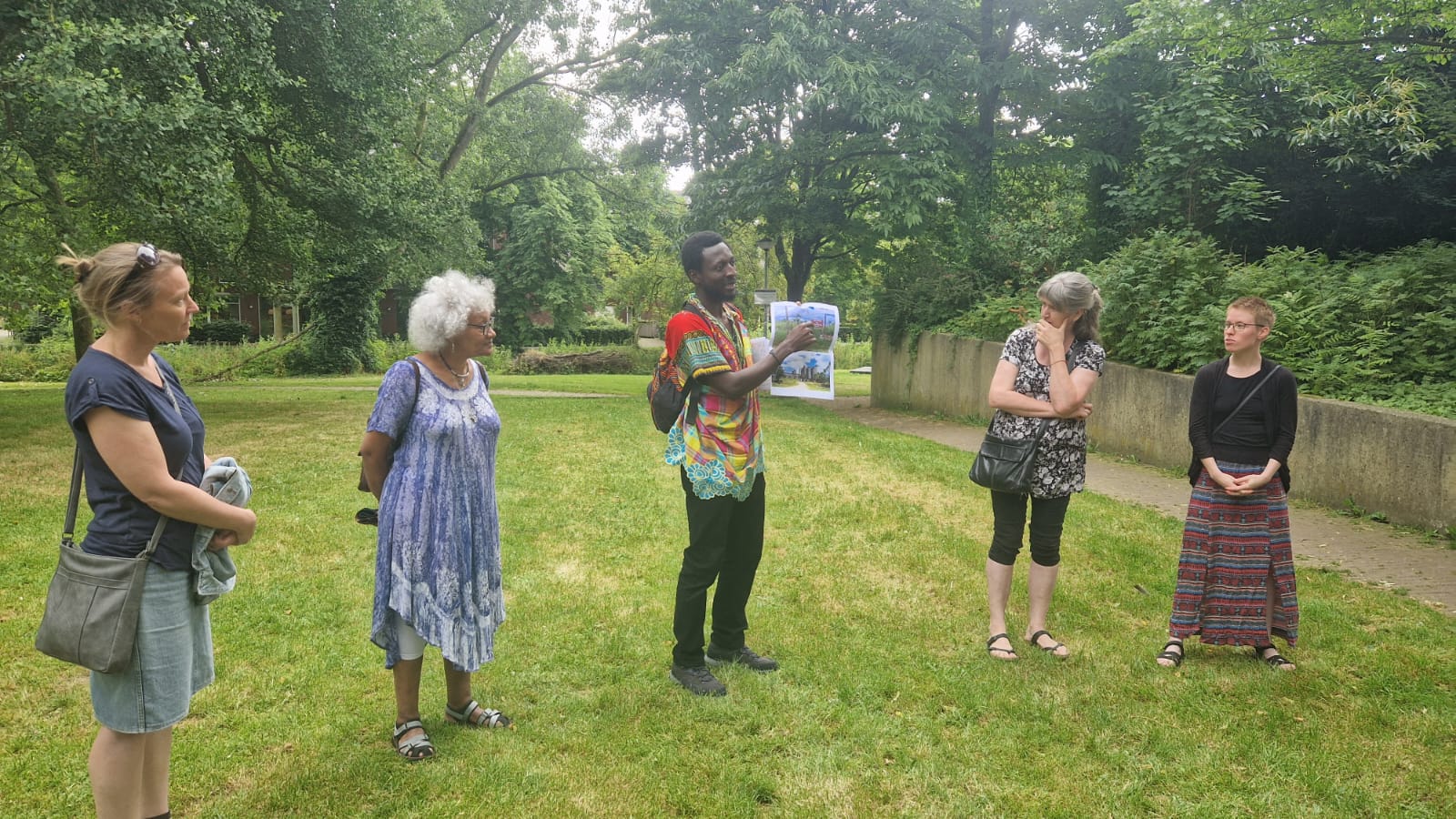
We traced the stories embodied in the past of the Bassecour building including that of Lubert Torck who built it with wealth generated on plantations in Suriname and Indonesia, of the former plantation owners who came to live there and of Andreas Lau – an enslaved boy from Berbice who was brought to Wageningen. We discussed the relation between Wageningen University and the Dutch colonial project in Suriname and Indonesia, the Laboratory of Tropical Agriculture that was housed in the former Boshuis building of the university among other topics.
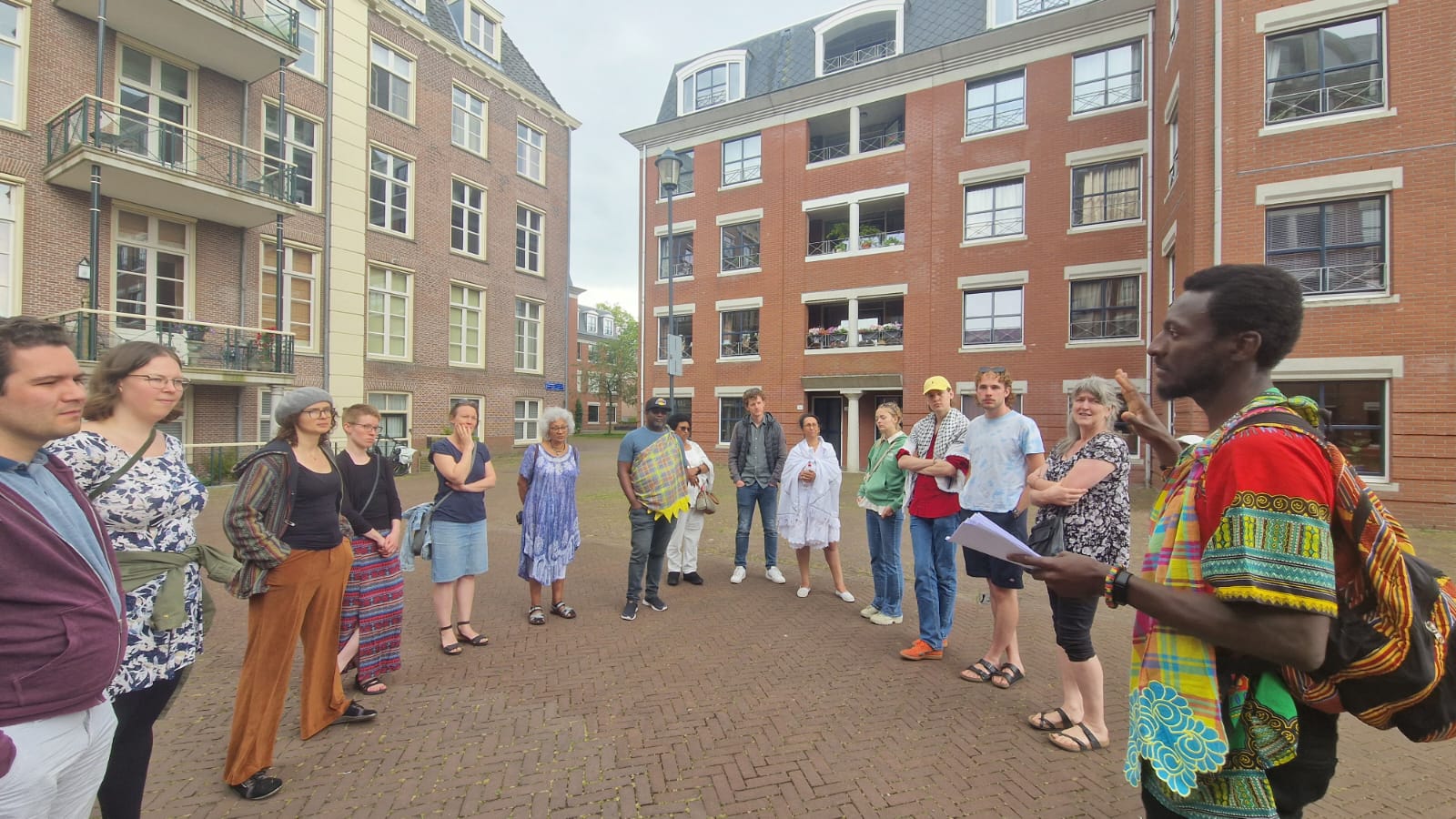
Our little town of Wageningen we learnt has so many tangible traces to the shared slavery and colonial past. From the stories we know about Bowlespark, the Aula – now Visum Mundi, to Huis Hinkeloord and to the many other stories yet to uncover in the archives, our city remains entangled with a past we need to learn more about. There is definitely a need for further research in the archives to uncover, trace and make know this slavery and colonial entanglements of Wageningen as a city.
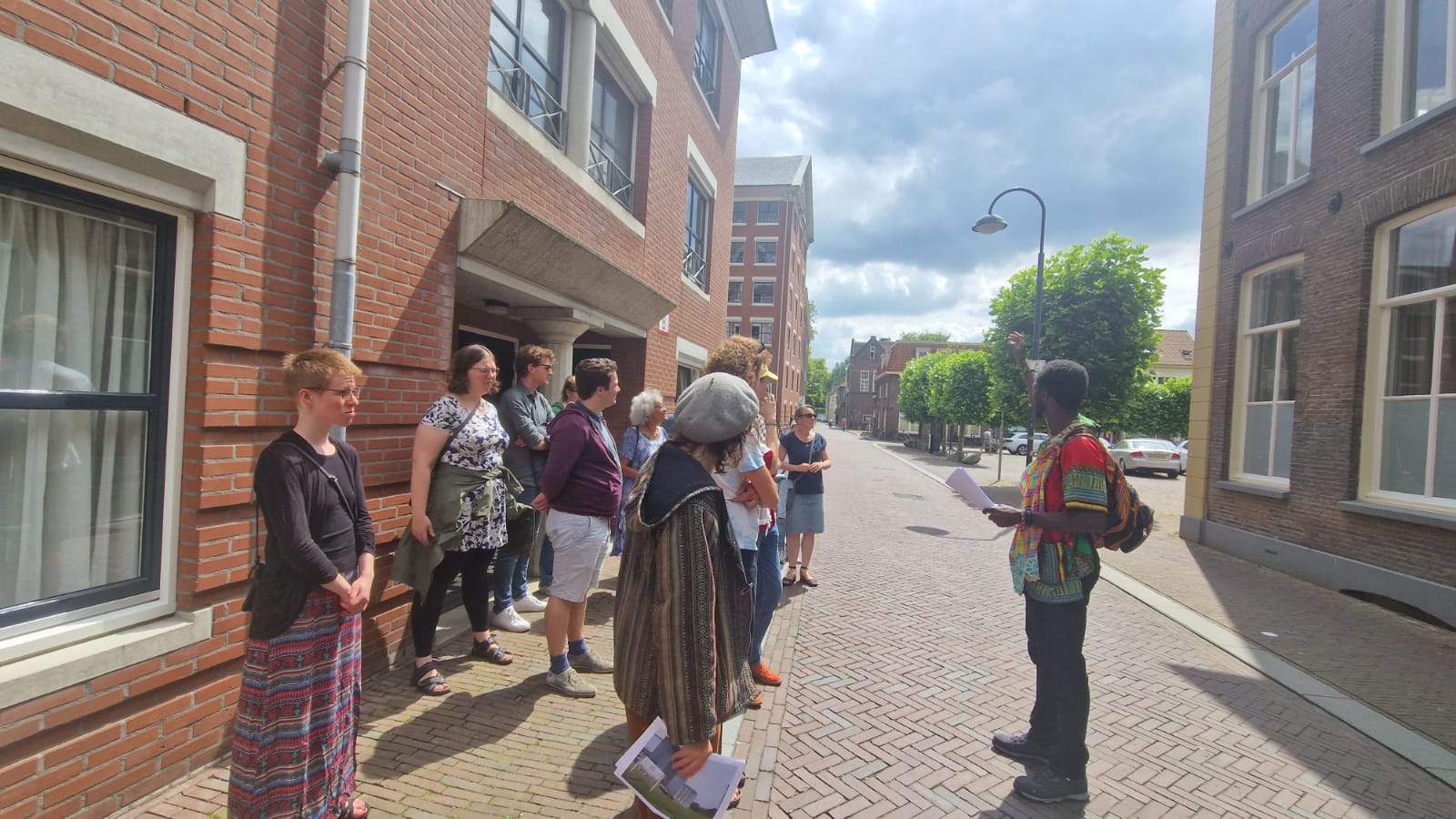
It was a surreal experience for me as a budding tour guide. I was glad to able to build my tour itinerary on the work we did with our wonderful students earlier this year in designing the Decolonial Tour Wageningen. While I was able to lean on the many years of researching and observing tour guides at work across my different countries and tourism context, I also realised that I still have some way to go in terms of polishing my skills as a tour guide. During the tour, I had my notes and sheets flying out of my hands as I frantically searched through the many papers to find the image I wanted to show. Thus, the first point of improvement for me is to get a clipboard to professionally arrange my notes and pictures. Then I have another dream….to have this tour become a regular feature in Wageningen and open to both residents and visiting tourists to the city. I might have to put my body where my dream lies by organising such a guided tour once a month or once every 6 weeks or some other regular rhthym. I already know that I am on schedule to give a tour on Thursday 29 August 2024 as part of the conference being organised by my colleague Larissa Schulte Nordholt on the “(Post)Colonial Histories of Universities in the Netherlands and Beyond”
Look out for annoucement of future tours that you can join. Together, we can learn about the shared history of our city and building bridges of connection for the future.
 Emmanuel Akwasi Adu-Ampong
Pingback: December to Remember: Afehyia Pa ooo | Emmanuel Akwasi Adu-Ampong