On Maudy Thursday, I made my way from Wageningen via Amsterdam to Lisbon where I will be spending this Easter weekend on a research fieldwork. It’s a rather packed scheduled in this short window. I arrived to town late morning to a rather wet and rainy welcome but I had no time to pity myself. The first tour for my participant observation was already scheduled for the afternoon. After dropping off my bags at the hostel, I headed out to Alfama neighbourhood in the rain to be on time for the start of the tour.
The 3-hour (ended up being close to 4 hours) THE SLAVE TRADE IN LISBON – A HISTORICAL WALKING TOUR (https://www.mylisbontours.com/slave-trade-lisbon-historical-walking-tour/) was very informative. There is a lot to analyse and say of the work of Rui Fernandes the tour guide who graciously agreed to another 1 hour of interview after a rain-drenched tour. For now, suffice to say that I learnt a lot about the tourism-heritage-memory space in Lisbon in relation to the embodied absence of the past of African presence and heritage. It was nice to see the bust of Pai Paulino as part of the efforts to make visible the long standing African heritage and presence in Lisbon’s history and urban spaces.
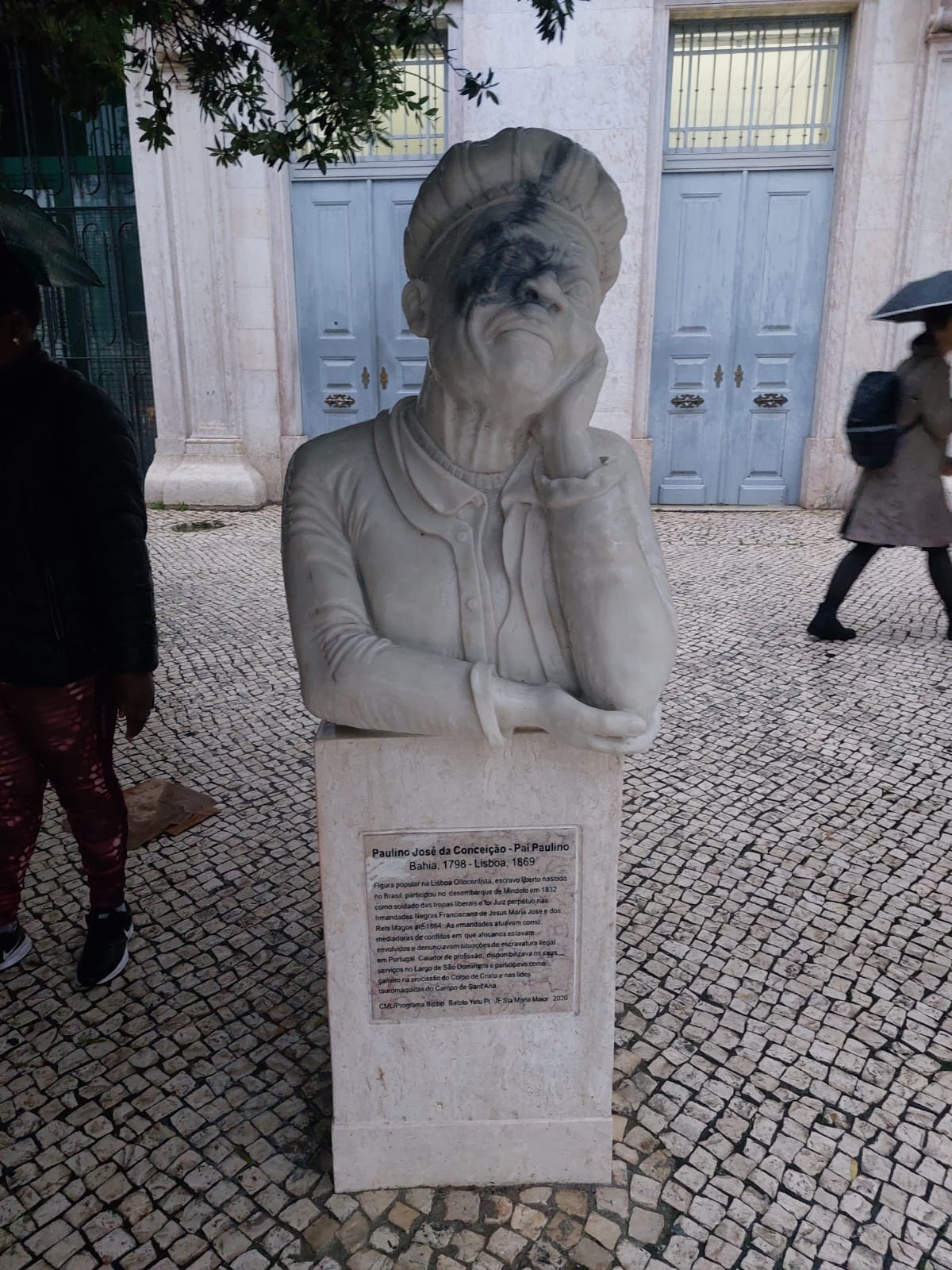
For this first Lisbon Letters, I wanted to reflect on the contrasting encounter of the bust of Pai Paulina and the other monuments I saw on the first day. On my flight to Lisbon I read 2 research articles. One by Perry Carter titled, “Art Works: Rendering the Absence Present by Bearing Witness at the National Memorial for Peace and Justice (https://www.tandfonline.com/doi/full/10.1080/24694452.2023.2284285?) and the other by Sofia Lovegrove and Raquel Rodrigues Machaqueiro titled, “Contesting monuments, challenging narratives: Divergent approaches to dealing with the colonial past and its legacies in Lisbon, Portugal” (https://www.sciencedirect.com/science/article/pii/S0305748823001160?). These were excellent articles that helped to prime for the fieldwork observations. Coming across the many huge monuments in Lisbon reminded me this text in Perry’s article:
“Conventional triumphalist monuments generally glorify an event, person, or ideology. These monuments tend to be monumental— that is, large in scale, grand in presentation, and figurative in form. Heroic monuments distance themselves from their audiences by being elevated above them and gazing into the distance beyond them. They work to secure particular hegemonic ideological narratives in the consciences of those who encounter them (Burk 2006; Carter, Sorrensen, and Elbow 2013; Stevens and Frank 2018).”
I encountered so many monuments exemplifying this point such as these two below…
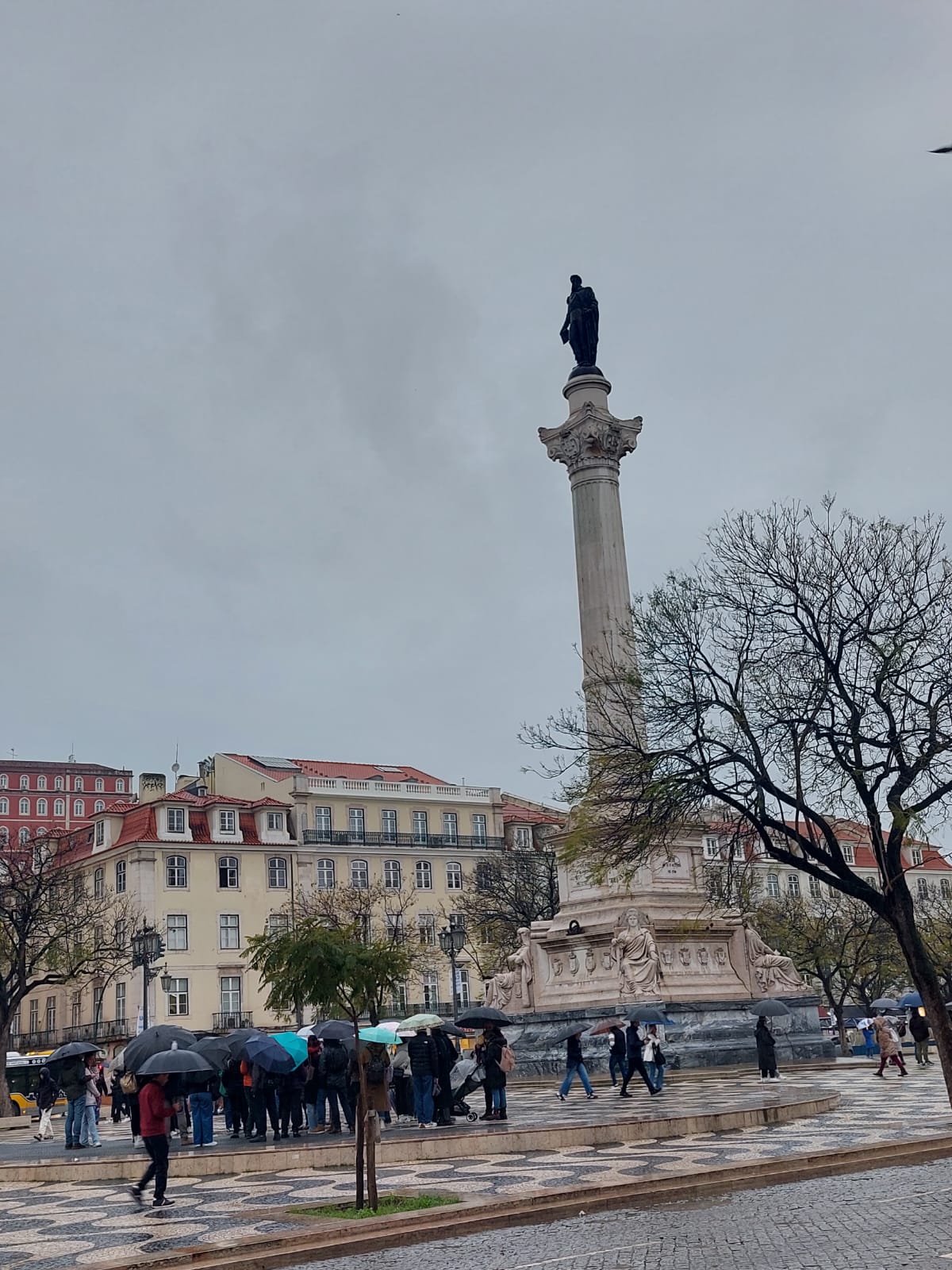
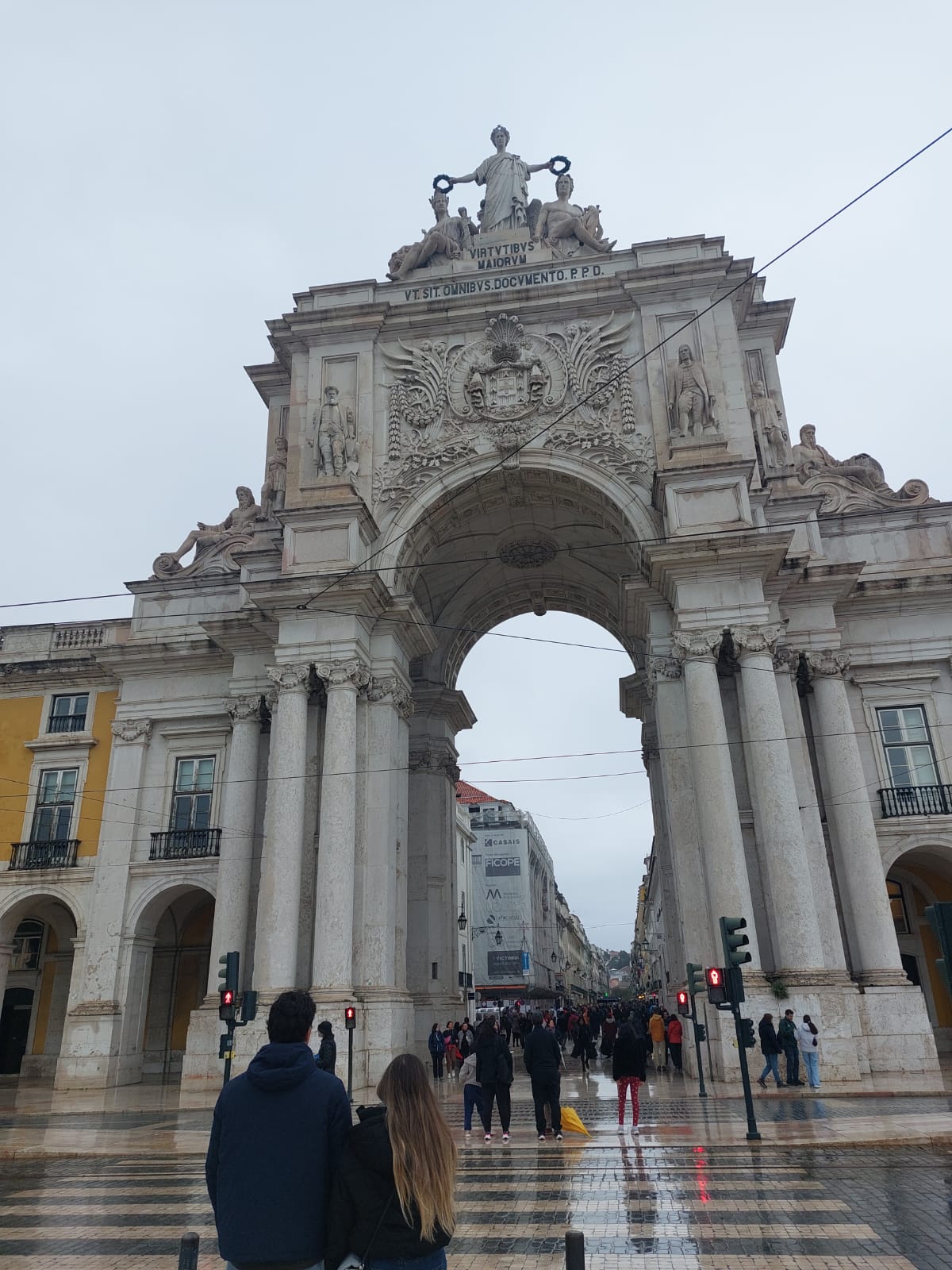
These two do indeed stand in great contrast to the first image above of the bust of Pai Paulino that seeks to make present the long existing African heritage in Lisbon’s urban spaces.
It’s time to set out for another day of fieldwork. At least the sun appears to be shinning but it might not last long given the forecast…
 Emmanuel Akwasi Adu-Ampong