We (Nuhu Ismail, Ana Aceska and myself) are delighted to share with you our co-authored paper that has just been published in the journal Cities. This is the second publication coming out of Nuhu’s PhD project/thesis that was successfully defended in March 2023.
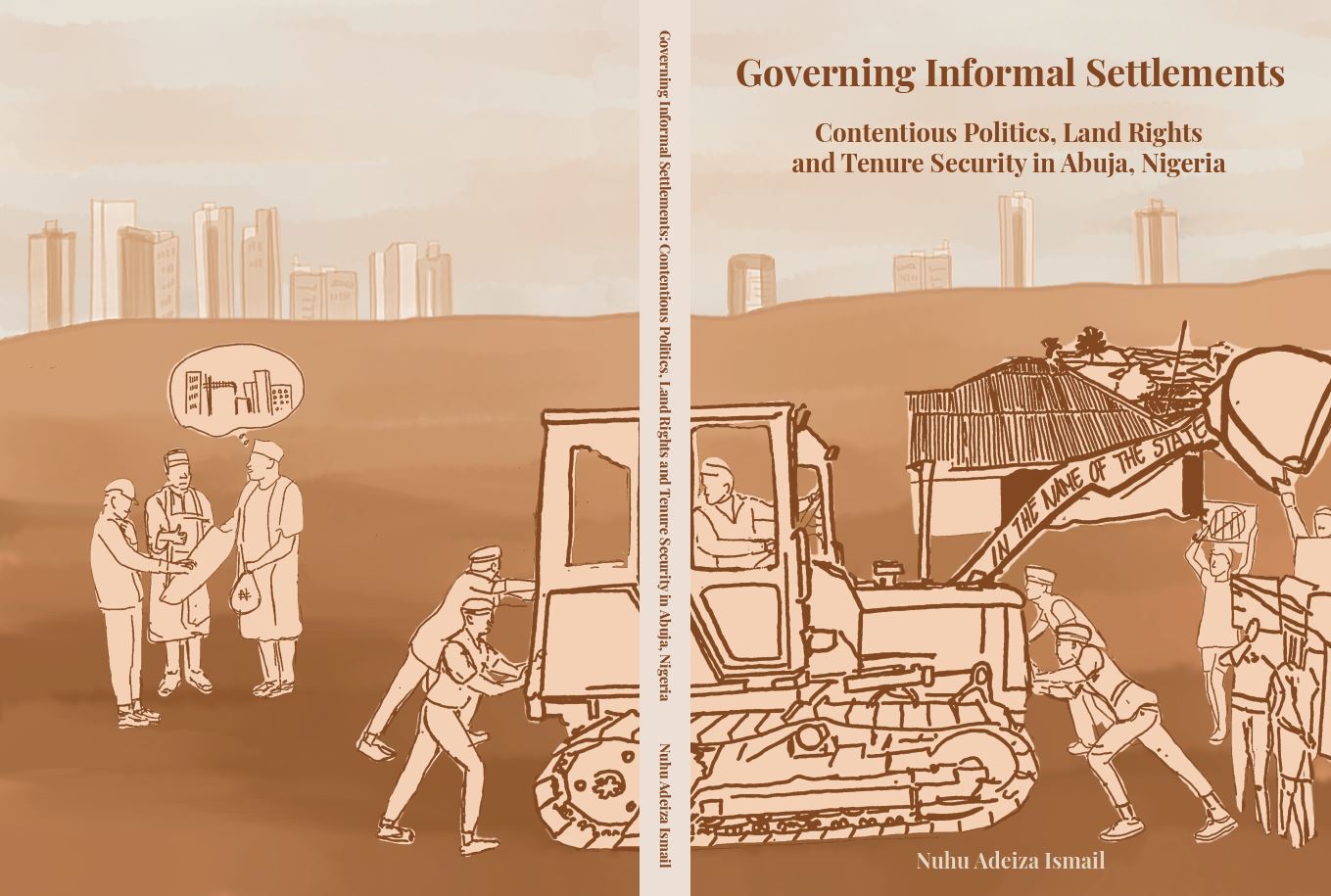
In this paper, we argue against ahistorical explanations of contemporary urban informal settlements and their governance challenges. Instead, we make a case that historical explorations are fundamental to the understanding of the complexities around the governance of informal settlements. We make use of the concepts of critical junctures and path dependency from historical institutionalism as a framework through which we carry out a historical exploration of the messy and complex dynamics of urban informal settlements in Abuja, Nigeria. This historical institutionalist approach enable us to provide insights into the historical legacies of Abuja’s urban planning policy evolution and trajectories. We identify that inconsistencies in the formulation of policies and their implementation in the planning of Abuja (and other similar cities) are a result of historically embedded problems. We provide conclusions and offer directions for future studies urban informality and on informal settlements. ture planning of urban informal settlements. History matters. Insights into historical legacies are the first step to a comprehensive understanding and future planning of urban informal settlements.
The paper is Open Access and freely available to download through this link and below…
https://www.sciencedirect.com/science/article/pii/S0264275124000039
The making of urban informal settlements: Critical junctures and path dependency in governing Abuja, Nigeria
Nuhu Adeiza Ismail, Emmanuel Akwasi Adu-Ampong and Ana Aceska
Abstract
History matters. Yet, explanations about the contemporary dynamics around informal settlements in global South cities are often divorced from their historical antecedents. We argue that a retrospective approach is important in analyzing and understanding the current dynamics around informal settlements. Applying the historical institutionalism approach and the concepts of critical junctures and path dependency, this paper develops an institutionalist approach to exploring the messy and complex dynamics of urban informal settlements in Abuja, Nigeria. Using interviews, focus group discussions, document analysis, and participant observations, we identify four key critical junctures: the Federal Capital Territory (FCT) ACT of 1976; the Land Use ACT of 1978, the 1979 master plan of Abuja, and the attempted demolition of Mpape in 2012 and the resulting 5-year court case that ended in 2017. These critical junctures have created path dependencies that explain the contemporary state of the urban informal settlements in Abuja, particularly in relation to land rights and tenure (in)security. This study shows how inconsistencies in the formulation of policies and their implementation in the planning of cities are a result of historically embedded problems. Insights into such historical legacies are the first step to a comprehensive understanding and future planning of urban informal settlements.
https://www.sciencedirect.com/science/article/pii/S0264275124000039
 Emmanuel Akwasi Adu-Ampong